

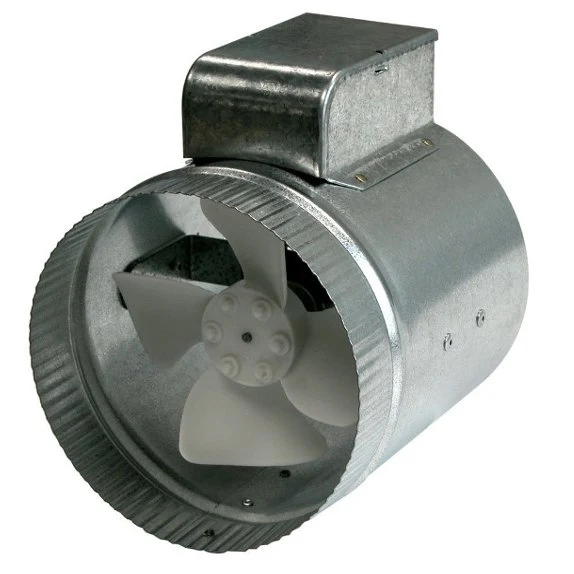
A distant room may receive weak airflow even though the central heating and cooling equipment operates normally. In suitable applications, an Air duct booster fan can be installed within a branch duct to help move conditioned air toward the affected space. Proper diagnosis remains essential because a booster should support a functioning duct system rather than compensate for damage, severe leakage, or unsuitable HVAC design.
Why Does Airflow Weaken Along a Duct Run?
The blower inside an air handler or furnace must overcome resistance throughout the air-distribution system. Duct length, internal surface, fittings, dampers, filters, coils, and grilles all contribute to this resistance.
A long branch serving a room far from the air handler may receive less air than a short, direct branch. Sharp elbows and abrupt transitions can add further pressure loss. Flexible duct that sags or becomes compressed creates additional resistance and may deliver less air than expected.
Common causes of weak airflow include:
- Long or complicated duct routes
- Undersized branch ducts
- Crushed or sagging flexible ductwork
- Loose or leaking duct connections
- Closed balancing dampers
- Dirty HVAC filters
- Blocked supply or return grilles
- Poor system balancing
- Inadequate return-air pathways
- Blower or equipment problems
These factors should be examined before installing an in-line fan. Correcting a disconnected duct or opening a closed damper may solve the problem without additional equipment.
How Does an In-Line Booster Fan Work?
An axial booster fan is mounted inside a round duct run. Its blades rotate in line with the direction of airflow, helping move air through the connected branch.
Unlike a register booster placed at the room grille, an in-line model operates within the duct system. This location allows it to support airflow before the air reaches the final register. It may be considered for a long run serving a room that is regularly too warm in summer or too cold in winter.
The fan does not heat or cool the air. It assists the movement of conditioned air already produced by the central system. Its usefulness therefore depends on the available airflow, duct condition, and pressure within the branch.
When Is a Booster Fan Appropriate?
A booster fan may be useful when the central system supplies adequate heating or cooling to most of the building, but one branch consistently underperforms. It can also be considered where major duct reconstruction would be difficult because the run passes through finished walls or ceilings.
Before recommending installation, contractors should confirm that:
- Some airflow is already present in the branch
- The duct is properly connected and reasonably sealed
- The room has a suitable return-air path
- The system filter and coils are not restricting airflow
- The main blower is operating correctly
- The fan size matches the duct diameter
- Electrical power and control methods are available
- The fan can be reached for future inspection
If several rooms have poor airflow, the issue may involve the main trunk, blower setting, system capacity, or overall duct design. A single branch fan is unlikely to correct a building-wide problem.
Why Do Duct Size and System Pressure Matter?
Booster fans are offered for specific round duct diameters. The selected fan should match the duct rather than being forced into place with poorly designed transitions.
An incorrect size may create turbulence, leakage, and additional noise. Contractors should also review the fan’s airflow performance in relation to system resistance. A free-air rating does not show exactly how the fan will perform once connected to a working duct system.
Static-pressure measurements can help determine whether the branch has unusually high resistance. These findings allow the installer to judge whether a booster is appropriate or whether the duct route requires correction.
More fan power is not always better. Excess airflow can create grille noise, disturb system balance, and reduce delivery to other branches. The goal is to provide enough support to the weak run without causing new comfort problems elsewhere.
Where Should the Fan Be Installed?
The fan should be placed in a straight section of compatible duct whenever possible. Airflow direction must match the arrow or markings on the fan housing.
The location should allow secure duct connections and adequate support. The fan should not hang from weak or damaged duct material. It must also remain accessible for inspection, cleaning, or replacement.
Installing the fan immediately beside a sharp elbow, damper, or abrupt transition may create turbulence and sound. Following the manufacturer’s required clearances and installation directions can help maintain stable airflow.
Although some models can be mounted at different angles, installers should always confirm the permitted orientation for the selected product.
How Should the Fan Be Controlled?
An in-line fan needs a suitable way to operate with the HVAC system. Depending on the product and application, control may involve a manual switch, variable-speed controller, pressure switch, temperature control, or connection that coordinates operation with the central blower.
The chosen method should prevent unnecessary operation when the HVAC system is off. Running a booster without available supply air may provide little benefit and could pull unconditioned air through duct leaks.
Electrical installation must follow the product instructions and applicable codes. Corded models require an approved receptacle in a suitable location. Cords should not be concealed inside building cavities or placed where they may be damaged.
What About Noise and Maintenance?
A properly installed booster should operate without excessive rattling or vibration. Secure duct joints and appropriate supports can help prevent sound from transferring into framing.
The fan should be checked periodically for dust, debris, loose connections, and unusual sound. Power must be disconnected before inspection or cleaning. A sudden increase in noise may indicate an obstruction, damaged blade, loose mounting point, or motor problem.
After installation, airflow and room temperature should be monitored through several heating and cooling cycles. Contractors should also check nearby rooms to confirm that the change has not disrupted system balance.
For weak airflow in a sound round-duct branch, an axial in-line fan may provide focused air-delivery support without extensive reconstruction. Visit Suncourts to compare available duct sizes and product features before planning your next residential or light-commercial airflow project.
